Seiten-Suche abschicken
Menü schließen

Bitte geben Sie Schlagworte und KEINE vollständigen Sätze ein, da die Suchfunktion ansonsten jedes einzelne Wort suchen würde.
Bitte geben Sie Ihren gewünschten Suchbegriff ein. Nach der Eingabe von drei Buchstaben erhalten Sie Vorschläge zu Ihrem Suchbegriff. Sie können das Ergebnis durch die Eingabe weiterer Buchstaben erweitern. Bei Auswahl eines Suchbegriffs innerhalb der Liste wird Ihnen auf der rechten Seite eine Voransicht angezeigt. Mit Return oder Klick auf die Lupe wechseln Sie zur Suchergebnisseite.
Website wird automatisch übersetzt. / Website is automatically translated.

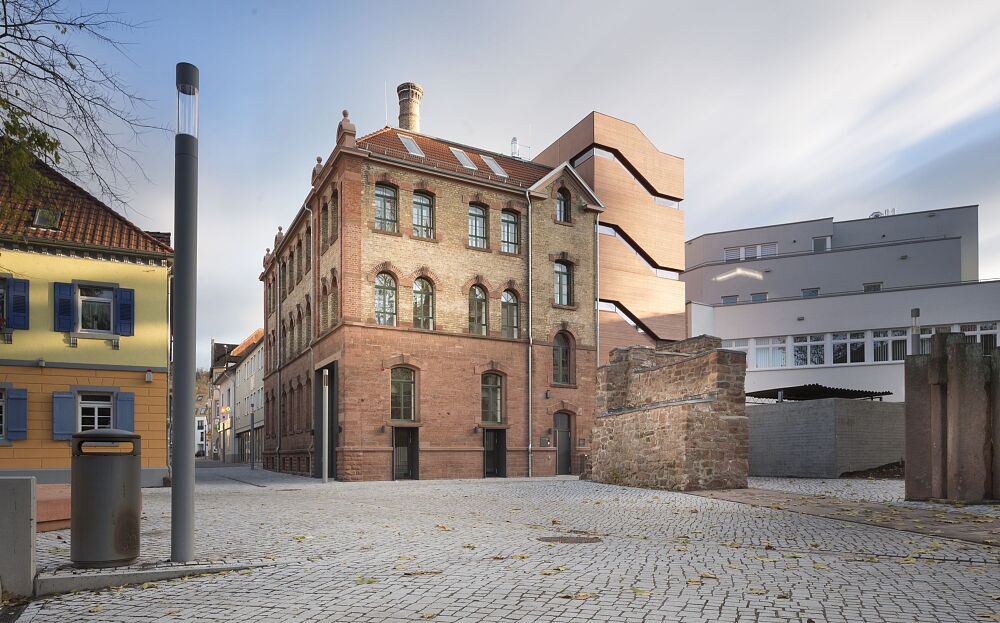
Das Stadtmuseum Lahr besteht aus drei Gebäuden, die jeweils andere Schwerpunkte der Stadtgeschichte zeigen:
Die ehemaligen Tonofenfabrik
Die Dauerausstellung entführt die Besuchenden anhand zahlreicher multimedialer Stationen und einem ArchäoLab in die Stadtgeschichte von der Römerzeit bis in die Moderne. Regelmäßige Sonderausstellungen ergänzen die stadtgeschichtliche Ausstellung.
Der Storchenturm
Das Wahrzeichen von Lahr liegt nur wenige Meter von der Tonofenfabrik entfernt. Er wurde um 1220 erbaut und symbolisiert wie kein anderes die Stadtgründung Lahrs.
Die Römeranlage
Die Römeranlage besteht aus einem rekonstruierten Streifenhaus mit Archäobotanischem Garten. Sie befindet sich im Bürgerpark auf dem Gelände der Landesgartenschau. Hier dreht sich alles um das Leben der Gallo-Römer, die im 2. Jahrhundert genau an dieser Stelle eine Siedlung gegründet hatten.
Rund hundert Jahre war das Gebäude des heutigen Stadtmuseums die Produktionsstätte der Ofen- und Tonwarenfabrik C.H. Liermann. Zur Blütezeit des Unternehmens stellten hier rund 40 Mitarbeiter über 3000 Kachelöfen pro Jahr her.
Die Tonofenfabrik ist ein typisches Beispiel Lahrer Industriearchitektur des ausgehenden 19. Jahrhunderts. Der Lahrer Architekt Carl Meurer errichtete das Gebäude in der Kreuzstraße im Jahr 1896 im Auftrag des Fabrikanten Carl Friedrich Liermann. Dessen Vater Christian Heinrich Liermann hatte 1854 die Ofen- und Tonwarenfabrik C.H. Liermann in Lahr gegründet, deren Räumlichkeiten auf der gegenüberliegenden Straßenseite ausgeschöpft waren.
In der neuen Fabrik stellte das Unternehmen bis zu 3 000 Kachelöfen pro Jahr her. Der Produktionsablauf verlief von oben nach unten: Im zweiten Stockwerk formten die Fabrikarbeiter die Tonwaren. Das Kacheldekor reichte von schlicht bis zu einer Vielzahl der typischen, eigens von Künstlern entworfenen Jugendstilmuster. Im ersten Obergeschoss befand sich die Glasur, im Erdgeschoss und im Keller standen die Hochöfen zum Brennen der Tonwaren. Das Tonlager, die Tonaufbereitung und die Glasurmühle befanden sich, angebaut an die Stadtmühle, auf dem Schlossplatz. Mitarbeiter transportierten die Rohstoffe per Handkarren zur Fabrik.
Mit der Verbreitung von Zentralheizungen wurde im Jahre 1957 die Produktion in der Tonofenfabrik eingestellt. Das Unternehmen wurde aufgegeben und das Gebäude an verschiedene Firmen vermietet. Zu Beginn des 21. Jahrhunderts wurden nur noch das Erdgeschoss und das erste Obergeschoss als Büro- und Lagerräume genutzt, das Gebäude verfiel zusehends. Im Jahr 2014 erwarb die Stadt Lahr das unter Denkmalschutz stehende Gebäude und baute die alte Tonofenfabrik nach den Entwürfen des Architekturbüros "heneghan peng architects" aus Berlin mit finanzieller Unterstützung des Bundes sowie des Landes Baden-Württemberg zum stadtgeschichtlichen Museum um.
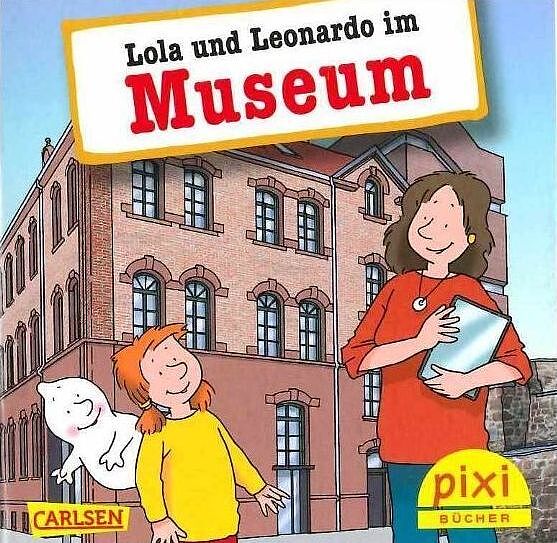
Die kleinen Pixi-Bücher kennen sicherlich viele. Zahlreiche Themen haben die handlichen Büchlein schon behandelt, nun gibt es auch mehrere Bücher, die in verschiedenen deutschen Museen spielen. Das Pixi des Stadtmuseums ist unverkennbar: Die Tonofenfabrik ist direkt auf der Titelseite dargestellt.
Während die Geschichte und die Figuren vorgegeben waren - Lola und Gespenst Leonardo besuchen das Museum -, konnte das Museumsteam an einigen Stellen frei bestimmen, was gezeichnet werden soll. Auch der Name der Museumspädagogin ist kein Zufall, er durfte ebenfalls selbst bestimmt werden.
Interessierte Museen konnten sich bereits 2020 an den Deutschen Museumsbund wenden, der in Kooperation mit dem Carlsen Verlag dieses Angebot geschaffen hat. Im September 2022 ist das Buch zum Lahrer Museum nun erschienen. Die Illustrationen stammen von Ralf Butschkow, die Geschichte von Corinna Fuchs.
Ab sofort kann das Pixi-Buch zum Preis von 0,99 Euro im Museumsshop erworben werden.